


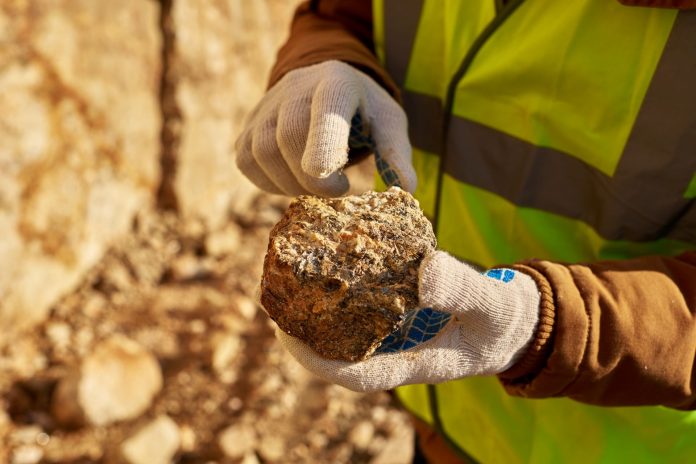
Europe declares critical raw materials a strategic priority
Europe no longer sees critical raw materials as just an economic resource. They become a matter of security, industrial independence and geopolitical stability.
This is the big change in the European approach. The European Commission is directing its efforts towards accelerating the domestic extraction and processing of critical raw materials, without formally renouncing high environmental standards.
The reason is clear: without raw materials there is no green transition, no electric cars, no batteries, no wind turbines, no modern defense industry, no semiconductors and no technological independence. In the new global order, access to lithium, honey, nickel, cobalt, graphite, rare earth elements, tungsten, gallium and other strategic materials is now comparable in importance to access to energy.
Europe no longer wants to be just a consumer
For decades, the EU exported much of the heavy industrial solutions outside its own borders. Mining and primary processing were often perceived as a problem, and not as part of the solution. Europe preferred to buy finished raw materials or intermediate products from third countries, while developing ambitious decarbonisation policies, electrification and digitization.
However, this model turned out to be vulnerable. The pandemic, the war in Ukraine, the energy crisis and tensions over China have shown how dangerous dependence on a limited number of suppliers can be. When an economy has no control over resources, on which her industry depends, it loses some of its strategic freedom.
That's why The European Critical Raw Materials Act sets specific goals to 2030 G.: at least 10% of the annual consumption of strategic raw materials in the EU to be mined in Europe, at least 40% to be revised within the Union, at least 25% to come from recycling, and the dependence on a single third country should not exceed 65%.
This is no longer wishful thinking, a new industrial doctrine.
Faster permits, but not “free regime”
One of the most important elements in the new approach is the acceleration of permitting regimes. The European Commission states, that strategic projects for critical raw materials will be able to benefit from shorter clearance times — up to 27 months for mining projects and up to 15 months for processing and recycling.
This does not mean automatic approval of every mining project. It means clearer procedures, less administrative delay and greater predictability for investors, states and local communities.
Prez 2025 G. The European Commission approved the first strategic projects under CRMA — 47 within the EU and more 13 outside the Union. They cover mining, processing, recycling and substitution of raw materials such as lithium, honey, nickel, cobalt, graphite, aluminum, rare earth elements and other materials, key to the energy transition and industrial security.
The connection with water legislation is also particularly important. In May 2026 G. The European Commission publishes guidelines for the implementation of The Water Framework Directive in the authorization of new and existing activities, with a particular focus on the mining sector. The aim is to reduce legal uncertainty and different interpretation between Member States, without removing water protection requirements.
It's a delicate balance: Europe wants more raw materials, but cannot afford to lose public trust, by creating an impression, that environmental rules are being circumvented.
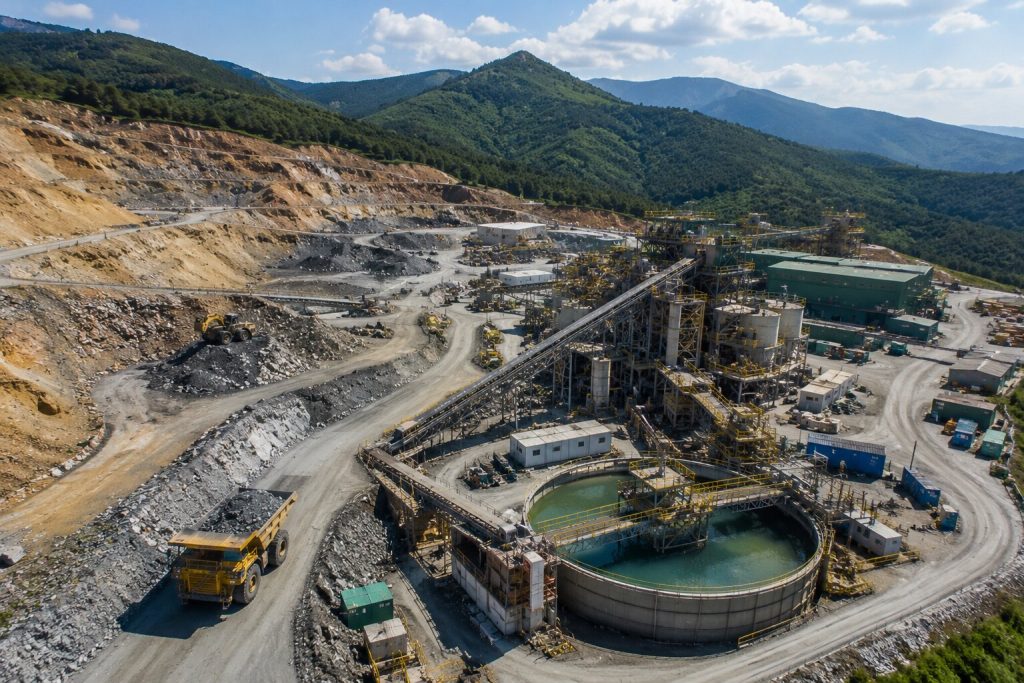
The critical raw materials are the new geopolitics
The official one list of EU critical raw materials shows how widespread the dependence of the European economy is. It includes raw materials, needed for batteries, permanent magnets, electronics, defense systems, aerospace technologies, solar panels and industrial alloys.
Rare earth elements are needed for permanent magnets in wind turbines, electric cars and high-tech engines. Lithium, the nickel, the cobalt, manganese and graphite are key to batteries. Copper is the backbone of electrification — from the power grid to charging stations, electric cars and renewable energy.
Therefore, the question is no longer whether Europe needs mining. The question is whether Europe will develop its own mining, processing and recycling to high standards, or will it continue to export the environmental and social cost of its green transition to other parts of the world.
This topic is also directly related to the broader question, which Geotopia has already placed: can Europe be green without its own mining? The answer is becoming more and more obvious — it can't. At least not if it wants to be industrially independent, competitive and technologically sovereign.
Bulgaria can be part of the solution
Against this background, Bulgaria has an advantage, which often underestimates. Our country has traditions in geology, mining, metallurgy and processing. He has expertise, operating enterprises, geological potential and industrial culture, which many European countries have yet to build.
Bulgaria is part of the European raw material map not only because of the existing copper mining, gold and other metal ores, but also because of the possibility to develop new geological studies, new technologies and new projects at high environmental standards.
Right here is the big chance. Europe is looking for more secure supply chains. Bulgaria has geological potential and industrial experience. If our country approaches strategically, it can be non-periphery, and an active participant in the new European policy for critical raw materials.
As highlighted by Geotopia in the analysis of the role of geological surveys for the future of Bulgaria, before there was a mine, processing or industrial chain, quality resource data must be available. Without geological surveys, there is no raw material independence.
The big challenge: speed, trust and standards
However, the new European course will not be easy. According to European Court of Auditors the EU policy on critical raw materials still has serious challenges — import dependence, delayed projects, insufficient recycling and difficulties in diversification.
That's what it means, that Europe must act simultaneously in several directions: more geological surveys, faster and more predictable permits, real support for strategic projects, development of processing facilities, recycling and better communication with local communities.
The biggest mistake would be to reduce the topic to a clash between "mining industry" and "environment". The real question is different: how Europe can provide the necessary raw materials for the future, without compromising on the waters, nature, people and local economies.
Geotopia opinion
Europe is finally admitting something, which the mining industry has been repeating for years: the green transition does not start from the charging station, the solar panel or electric car. It starts with geology, from the deposits, from the ore, from processing and from the entire industrial chain, which turns a natural resource into technology.
Critical raw materials are no longer a technical topic for experts. They are a matter of security, jobs, competitiveness and sovereignty. If Europe wants to be a leader in the green economy, it cannot be a dependent user of foreign raw materials. Must be a manufacturer, processor, innovator and responsible regulator.
For Bulgaria, this is an opportunity. But it will not be realized by itself. Modern geological studies are needed, predictable procedures, honest public conversation and clear political will. Our country can be part of the European solution — as long as it stops seeing its own resources as a problem and starts managing them as a strategic asset.



Europe is already clearly stating, that critical raw materials are a strategic priority. The next step is to translate this into real action – accelerating geological exploration, faster resolution of strategic projects and reduction of unnecessary administrative burden, without compromising on high environmental standards. Bulgaria has proven mineral potential and has a chance to be part of the European supply chain, but only if it creates a predictable and effective regulatory environment. Otherwise, we will continue to import raw materials, that we could source responsibly here, under some of the strictest environmental requirements in the world.