


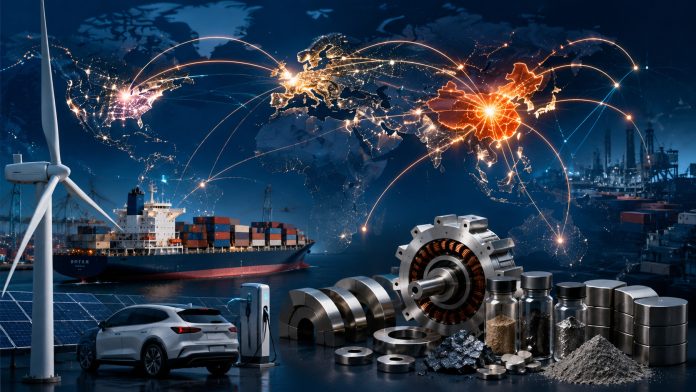
The new goal: no more than 60% dependence on one supplier
The Group of Seven advanced economies sets a new strategic goal: to 2030 G. no country outside the G-7 and partner countries should supply more than 60% of the necessary rare earth elements and permanent magnets. This is clear from the official G-7 statement on the security of critical minerals supply chains, published on 17 June 2026 G.
In practice, the document is not just another diplomatic declaration. He is a confession, that critical raw materials are now essential infrastructure of the modern economy—just as important, as much as energy, the transport, telecommunications and defense.
The topic was also emphasized in a publication of Mining.com, based on Bloomberg information, according to which rare earth elements and permanent magnets are the first group of raw materials, for which the G-7 sets a specific quantitative threshold. For the remaining critical minerals, individual targets are expected to be specified by the end of the year.
Why exactly the rare earth elements?
Rare earth elements are not "rare" in the sense, that they are hardly found in the earth's crust. The problem is different: they are rarely found in high enough concentrations, they are difficult to separate from each other and require a complex technological chain — from extraction and enrichment to separation, refining and production of highly specialized products.
The most important application is permanent magnets, used in electric vehicles, wind turbines, industrial robots, drones, radars, sensors, defense systems and high performance electronics. That's why, when talking about rare earth elements, the real question is not just "who has the deposits", and who controls the entire chain — from the scale to the final component.
It is precisely this dependency that Geotopia has already considered in the analysis "Rare Earth Elements in China Bring Global Tremor", where we traced how new deposits and technological capacity could enhance Beijing's geopolitical influence.
China holds the key to more than mining, but to processing
China's greatest advantage is not only in geological resources. The real power is in the rework. According to Global Critical Minerals Outlook 2025 of the International Energy Agency, concentration in the refining and processing of critical minerals remains extremely high, with China leading the way in graphite, cobalt and rare earth elements.
This is the essential difference between "having ore" and "having industrial independence". A country can have deposits, but if there is no processing capacity, separation, refining and component manufacturing, it continues to depend on an external industrial center.
This logic is close to the point, which we considered in "The road from rock to metal" — the metal does not appear directly from the earth as a finished product. There is a long way between the deposit and modern technology, expensive and high-tech industrial chain.
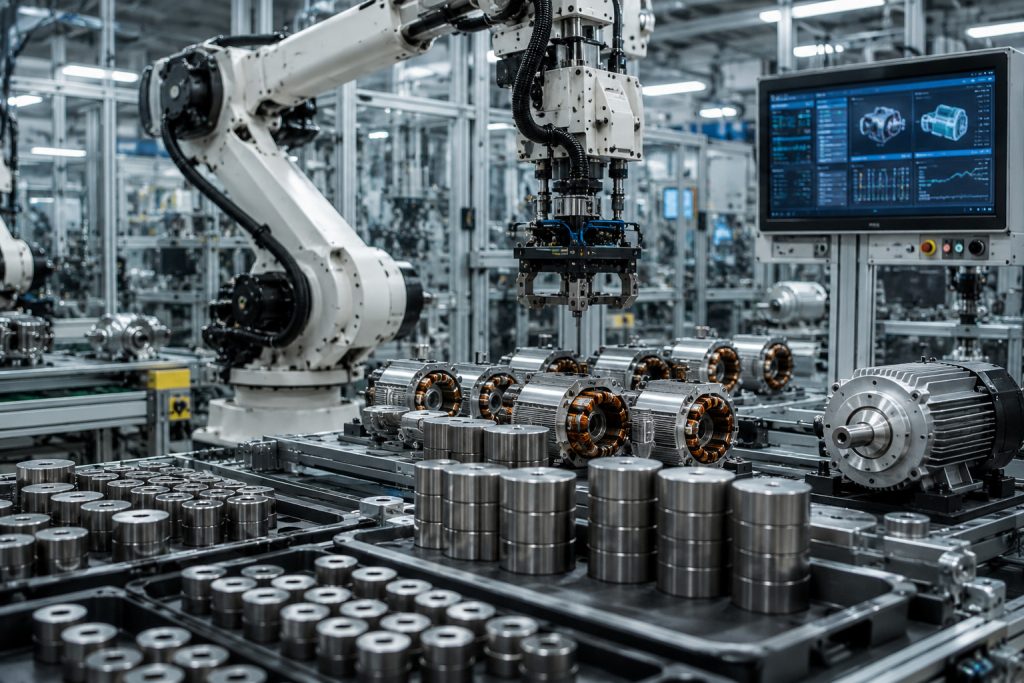
Europe is already thinking in the same direction
The G7's position coincides with the broader European strategy to reduce dependence on a single supplier. The European Critical Raw Materials Act sets clear goals to 2030 G.: at least 10% of the annual consumption of strategic raw materials in the EU to come from own production, 40% from the processing to be carried out in Europe, 25% to be provided through recycling, and not more than 65% of a given strategic raw material to come from a third country.
This is an important turning point in European industrial policy. For many years, Europe preferred to be primarily a consumer of raw materials and technology, by exporting the heavy processes — extraction, processing, metallurgy — beyond its own borders. Today, this model looks increasingly risky.
As Geotopia already noted in the analysis "Can Europe be green without its own mining?"?“, the green transition does not eliminate the need for raw materials. He changes her. The world will use less coal, oil and gas, but it will need more honey, lithium, nickel, cobalt, graphite and rare earth elements.
Recycling, new mining and strategic reserves
The G7 is not only betting on new mines. The declaration also talks about recycling, traceability, strategic stocks, public-private financing and joint industrial projects. This is important, because no tool alone can solve the problem.
Recycling is a necessary part of the future, but it has natural limitations. For a magnet to be recycled, battery or electric motor, the relevant product must first be produced, used for years and only then reach the end of its life cycle. That's what it means, that recycling cannot alone power the first great wave of electrification, дигитализация и индустриална модернизация.
Затова новите проекти за добив и преработка остават неизбежни. The European Commission has already announced a first list of strategic projects for critical raw materials, like Reuters reported, that they cover mining, processing and recycling of materials such as lithium, nickel, cobalt, graphite, copper and rare earth elements.
What does this mean for the mining industry??
The G7 decision is a strong signal to the mining industry: critical minerals projects will no longer be evaluated by the classical logic of cost alone, добив и възвръщаемост. Те ще бъдат разглеждани и през призмата на националната сигурност, индустриалната независимост, технологичния суверенитет и устойчивостта на веригите за доставки.
Това може да доведе до няколко важни ефекта:
First, ще се увеличи политическата и финансова подкрепа за проекти в надеждни юрисдикции — включително в Европа, Канада, Австралия и партньорски държави.
Second, проектите с високи екологични, социални и управленски стандарти ще имат по-добър достъп до финансиране, защото Г-7 ясно обвързва сигурността на доставките с прозрачност, проследимост и трудови стандарти.
Third, ще нарасне значението на преработката. Самият добив вече няма да е достатъчен. Стратегическата стойност ще бъде там, където суровината се превръща в материал, материалът — в компонент, а компонентът — в индустриално предимство.
Copper, rare earth elements and the new economy
Макар че фокусът на декларацията е върху редкоземните елементи и постоянните магнити, темата е много по-широка. Същата логика важи и за медта, без която електропреносните мрежи, electric cars, зарядната инфраструктура и възобновяемата енергия са невъзможни.
В материала "Copper - the metal, without which there is no green transition" Geotopia разгледа защо този метал се превръща в един от ключовите ресурси на XXI век. При редкоземните елементи картината е още по-стратегическа, защото става дума за по-малки пазари, по-сложна преработка и много по-висока концентрация на доставките.
Geopolitics is already running through the mines
Дълго време минната индустрия беше възприемана предимно като суровинен сектор. Днес тя все по-често се превръща в част от голямата геополитика. Въпросът вече не е само кой продава най-евтино, а кой може да гарантира сигурни, прозрачни и устойчиви доставки в момент на глобални напрежения.
Решението на Г-7 показва, че суровинната независимост вече се разглежда като стратегическа цел. Това не означава пълно отделяне от Китай. Такъв сценарий е нереалистичен в краткосрочен план. Но означава постепенен опит за намаляване на уязвимостта, така че нито една държава да не може да използва критичните минерали като инструмент за политически или икономически натиск.
Geotopia opinion:
Целта на Г-7 за ограничаване на зависимостта от един доставчик при редкоземните елементи е повече от търговска мярка. Тя е признание, че бъдещето на зелената енергия, the defense, електромобилността и дигиталната икономика зависи от нещо много конкретно — руди, minerals, преработвателни мощности и индустриални вериги.
За Европа това е особено важен урок. Не може да има зелен преход без суровини. Не може да има технологична независимост без добив, преработка и рециклиране. И не може да има устойчива индустрия, ако всички тежки решения се изнасят извън континента.
Истинският въпрос не е дали ще има добив, а какъв ще бъде той — при какви екологични стандарти, с какъв обществен контрол, с каква добавена стойност за местните икономики и с каква дългосрочна визия. Ако Европа иска да бъде не само потребител, а реален участник в икономиката на бъдещето, критичните суровини трябва да излязат от периферията на политическия разговор и да застанат в центъра на индустриалната стратегия.



Решението на Г-7 е ясен сигнал, че достъпът до критични суровини вече е въпрос на икономическа сигурност и стратегическа независимост. Но преди да има добив, преработка или рециклиране, трябва да има нещо още по-фундаментално – качествени геоложки проучвания.
Без актуални геоложки данни няма как Европа да знае с какви ресурси реално разполага и къде трябва да насочи инвестиции. Затова през следващите години геоложкото картиране, проучването на нови находища и развитието на националните геоложки служби ще бъдат не по-малко важни от самите минни проекти.
За България това е особено актуално. Страната има дългогодишни традиции в геологията и минната индустрия, но голяма част от територията остава недостатъчно проучена с модерни методи. Ако Европа търси по-голяма суровинна независимост, България има шанс да бъде част от решението чрез нови геоложки изследвания, откриване на ресурси и развитие на проекти при високи екологични стандарти.
В крайна сметка геополитиката на бъдещето започва не във фабриките, а на геоложката карта. Който познава собствените си ресурси, има много по-голям шанс да изгради устойчива индустрия и технологична независимост.