


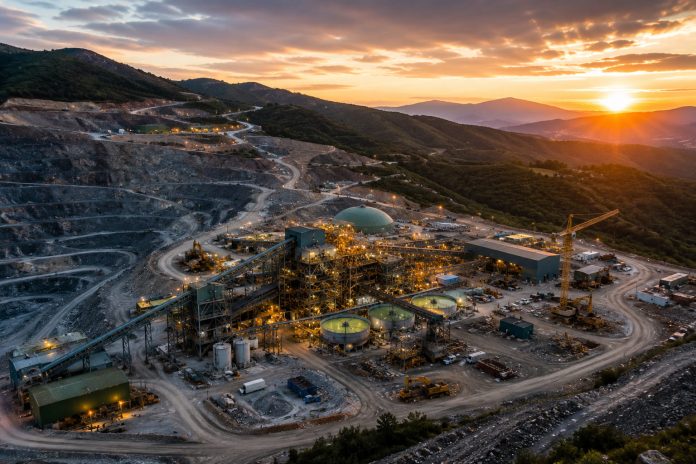
One of the most significant mining projects in Southeast Europe is entering a crucial stage. After years of administrative delays, public disputes and revision of schedules, the gold-copper project Scouries in Halkidiki is already approaching the start of real production.
The Canadian company Eldorado Gold plans to begin commercial production of copper-gold concentrate from the deposit in the last quarter of 2026 G. The project is part of the complex Kassandra Mines in Northern Greece and is seen as one of the most important new mining investments in the Balkans.
Skouries – a project of European importance
Skouries is located in the northeastern part of the Halkidiki peninsula. According to the information of Eldorado Gold, the deposit is of the type copper-gold porphyry and will be developed through a combination of open pit and underground mining.
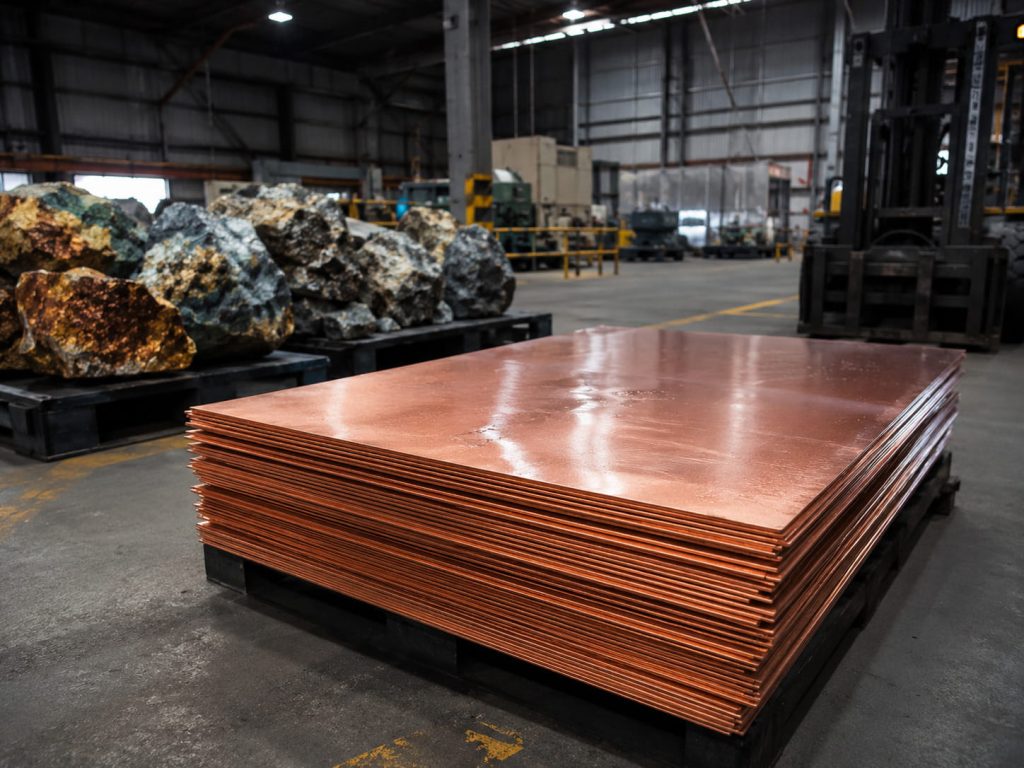
This is particularly important, because the project is not only gold. Its strategic importance comes precisely from the content of honey – metal, which is increasingly seen as a key raw material for the energy transition, electrification, power transmission networks, electric cars, data centers and industrial modernization.
In this sense, Skouries is not just a regional mining project. It fits into the bigger European picture, in which the continent seeks safer and closer sources of strategic raw materials. As we have already discussed in Geotopia.bg, copper is the metal, without which there is no green transition.
What are the dimensions of the deposit?
The official information of Hellas Gold points out, that the initial life of the mine is expected to be approx 20 years. Average annual production is planned at approx 140 000 ounces of gold And 67 million pounds of copper.
These numbers place Skouries among the most significant new gold and copper mining projects in Europe. The project has already been reported as approx 94% completed to 31 March 2026 G., with the first production of copper-gold concentrate expected in the third quarter of 2026 G., and commercial production - in the fourth quarter of the year.
According to the data, quoted by Money.bg, the total investment in the Kassandra Mines complex exceeds 3 billion. dollars, and Skouries itself is valued at over 2 billion. dollars. This makes the project one of the largest industrial investments in Northern Greece.
Why copper is becoming more important?
Gold traditionally attracts attention, but in the case of Skouries copper is just as important, and perhaps more strategic. The European Commission includes copper among the strategic raw materials under the critical and strategic materials policies, although it does not fall into the classic list of "critical" raw materials by all indicators.
The reason is clear: copper is fundamental to electrical infrastructure. It is used in cables, transformators, electric motors, renewable energy capacities, industrial systems, electric vehicles and digital infrastructure. According to European Commission information, The EU is highly dependent on external supplies of many important raw materials, including at the mining stage.
Additionally, in EC information material on copper as a strategic raw material is indicated, that EU copper demand is expected to grow by more than 50% to 2050 G., powered by renewable energy, electric mobility and industrial applications.
That is why a project like Skouries can no longer be viewed only through a local or national prism. It is part of the larger issue: can Europe make its green and technological transition without its own mining? This topic is also discussed in the Geotopia.bg analysis: Can Europe be green without its own mining??.
Long way to go
Skouries is not a project, which develops without resistance. In the last decade, it has gone through serious delays, administrative obstacles, public debates and disputes about the environmental and social effects of future mining.
This makes it a telling example of the difficult balance, facing Europe. On the one hand, societies want clean energy, electric cars, modern industry and lower dependence on external suppliers. On the other hand, any new mining project inevitably raises questions about water, landscape, biodiversity, local communities and the long-term responsibility of the investor.
This is where the real European debate lies. The question is no longer simply "for" or "against" mining. The question is what yield, under what standards, with what control, with what guarantees and with what real benefit to local communities.
Economic effect for the region
In the construction phase of Skouries, approx 3200 souls, including employees of external contractors. For the entire Kassandra Mines complex it is stated, that investment supports thousands of direct and indirect jobs.
This is particularly important for the Northern Greece region, which traditionally seeks sustainable industrial investment outside of seasonal tourism. Mining projects of this scale can create more than just direct employment, but also a market for local suppliers, engineering companies, transport services, construction, staff training and long-term tax revenue.
Of course, the economic effect depends on the method, by which the project is managed. For local communities, transparency is key, real access to jobs, control over environmental parameters and constant dialogue between the investor, institutions and citizens.
The Balkans once again enter the mining map of Europe
Skouries is part of a wider trend. The Balkans are increasingly the focus of major mining companies for their copper potential, gold, lead, zinc, lithium and other strategic raw materials. Projects in Serbia, Bulgaria, Greece, North Macedonia and Romania show, that the region has real significance for Europe's future supply chains.
The difference compared to the past is, that today the mining industry can no longer rely on geology and capital alone. It must prove social acceptability, technological modernity, environmental responsibility and real local value.
Skouries will be an important test in this regard. If the project is successfully commissioned, it could become an example of how a major mining investment in Europe can combine strategic raw materials, industrial development and higher control standards. However, if it fails to convince the public of its transparency and safety, will remain a symbol of the tension between the need for raw materials and the fear of environmental risks.
Geotopia opinion: Without raw materials, there is no green transition
Skouries shows one of the great paradoxes of Europe: we want a green transition, electric cars, renewable energy and independence from external suppliers, but we often refuse new mining projects in our own territory.
Geotopia's editorial position is, that Europe needs responsible mining — not at any cost, and under clear rules, strict control, high environmental standards and real benefits for local communities.
No access to honey, gold and other strategic raw materials, the green and industrial transition will remain only a political promise. Skouries is an important test of whether Europe can find a balance between nature, the economy and security of raw materials.



Skories is a telling example of how a country can turn its natural resources into an engine of economic development. Despite years of public debate and legal proceedings, the Greek state stood behind the strategic investment, because he recognized its importance for jobs, regional development and the security of supply of critical raw materials for Europe. Today, the project is among the largest foreign investments in Greece and is on the final right to production.
Unfortunately, in Bulgaria, we often observe the opposite trend - strategic projects are delayed or blocked for years, although they can bring investment, high-paying jobs and development of entire regions. If we want to be competitive in Europe, we must support responsible geological exploration and sustainable development of mineral resources, rather than turning them into endless administrative cases.