


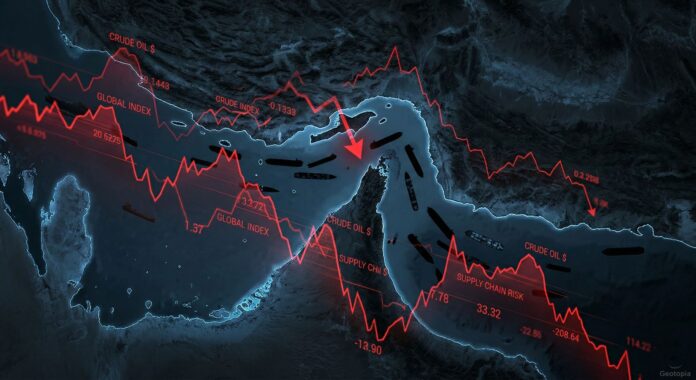
The closing of Strait of Hormuz in March 2026 G. caused an unprecedented global upheaval in the energy and commodity markets. After the escalation of military strikes between the US, Israel and Iran, this key sea route is completely blocked, cutting off vital logistics arteries. The world is facing a historic crisis, which rewrites the rules of global trade and affects everything from oil to critical minerals and sustainable development.
Global Context after the Strait of Hormuz Blockade
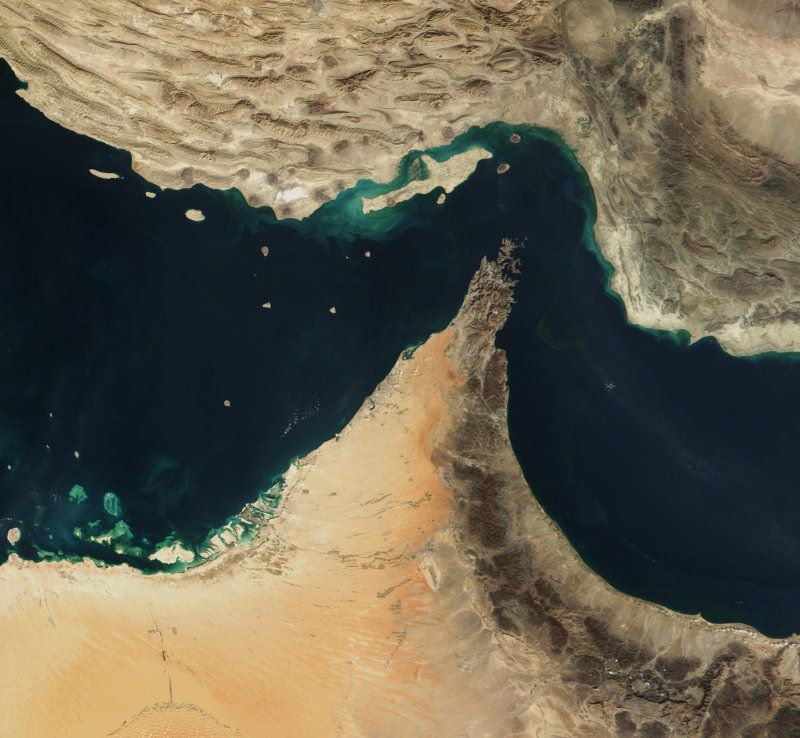
The geography of the Strait of Hormuz makes it the most important transit point for the global energy security. At its narrowest part, it is barely wide 33 kilometers, but through it pass over 20 million barrels of oil per day. This represents approx 20% of world consumption, as well as a huge portion of liquefied natural gas exports (LNG) from Qatar and UAE.
Compared to the oil shocks of the 1970s, the current crisis is much more complex because of the interconnectedness of modern logistics chains. According to data of International Energy Agency (MY), a complete interruption of these supplies results in an immediate shortage, which cannot be offset by the West's strategic reserves. The conflict has sharply pushed up the price of crude oil (Brent) above the limit of $120 per barrel, creating panic in the stock markets.
Historical data shows, that even partial restrictions in this region have led to severe recessions. Today, in the context of an already fragile economic recovery, the geopolitical conflict act as a catalyst for a new wave of global stagflation. The competition between Europe and Asia for alternative energy sources is reaching critical levels.
Resources beyond oil in the Strait of Hormuz: technical profile
When discussing the Strait of Hormuz, the focus usually falls on hydrocarbons, but the scientific and industrial profile of the region reveals much deeper dependencies. The Gulf countries are giants in the production of energy-intensive materials such as primary aluminum. The mining process (electrolysis according to the Hall-Eru method) requires colossal amounts of electricity, which is generated cheaply there through abundant natural gas.
Blocking the export of these metals creates a chain reaction in the world's automotive and construction industries. From a geological and chemical point of view, the region is a key source of sulfur as well, which is extracted as a byproduct of oil refining (through the Klaus process). Sulfur is a fundamental raw material for the production of phosphate fertilizers, without which modern agriculture is unthinkable.
Here are some of the most affected non-energy sectors:
- Aluminum and alloys: Suspension of supplies from the metallurgical plants in the UAE and Bahrain, which directly hits green technologies.
- Sulfur and agrochemistry: Shortage of key components for fertilizer production, threatening global food security.
- Investment gold: The isolation of Dubai as a major hub for physical trading of precious metals has blocked refineries and vaults.
Although the rare earth elements to be mined mainly in Asia, increased transport insurance (war risk premiums) and chaos in shipping paralyze their transit as well. This creates an artificial shortage in the market critical minerals, necessary for the production of batteries, solar panels and microchips.
Socio-economic dimension and the role of the Strait of Hormuz
The economic consequences of closed waters are felt in a flash, from the common consumer to the large industrial conglomerates. The industries, relying on the mining sector and heavy chemistry, are already announcing production cuts. The closure of the Strait of Hormuz forced a halt to central banks' plans to cut interest rates, as inflationary pressures are once again out of control.
The gold, the traditional refuge in periods of geopolitical crises, registered historic highs. The investors, seeking salvation from depreciating fiat money, pushed prices to levels of approx $5,400 per ounce. According to analyzes of The World Bank, a prolonged blockade could lead to a drop in global GDP by up to 3% for just a few quarters.
The social dimension is mainly expressed in the rising prices of food and fuel. Increased logistics costs and shortages of raw materials are hitting developing economies the hardest. Energy poverty becomes a real risk even for some households in Europe, which creates conditions for political instability.
Forecast analysis for the Strait of Hormuz in the coming months
Looking to the future, the coming weeks and months will be decisive for the adaptation of the world economy. If military action keeps the blockade of the Strait of Hormuz for more than 30 days, we will witness structural changes in the raw materials industry. States will be forced to activate crisis plans to search for local alternatives.
A massive inflow of capital to exploration and mining is expected minerals in safe jurisdictions such as North America, Australia and parts of Europe. This could accelerate the transition to renewables, but paradoxically, the green transition will be delayed in the short term due to the lack of materials to build its infrastructure.
Geopolitically, the search for new land corridors and pipelines, surrounding the conflict zone, will become a top priority for strategic planning. However, the engineering implementation of such megaprojects takes years, which means, that the world must learn to function under conditions of acute raw material deficit in the foreseeable future.
Geotopia opinion: Modern civilization is at a critical tipping point, where geopolitical ambitions collide with the fragility of global resource chains. The current crisis clearly shows, that the transition to sustainable development and local extraction of key raw materials is not just an environmental fad, but an existential question of national and economic security. We need an urgent and sensible consensus among science, responsible mining industry and political leadership, to build sustainable alternatives, independent of vulnerable and militarized trade arteries.