



The price of gold crossed the psychological boundary of 5 200 dollars per troy ounce, sending a clear signal to global financial markets that we are entering a new era of economic uncertainty. This unprecedented surge is a direct result of the complex symbiosis between aggressive US trade policy and escalating tensions in the Middle East, which forces investors to seek salvation in "safe havens".
Market dynamics and record levels of precious metals
In recent sessions spot the price of gold saw impressive growth from 1,3%, reaching peak values above 5 200 dollars, before stabilizing at approx 5 180 dollars. This impulse did not remain isolated – the silver, often called "poor man's gold", also shows off muscles, becoming more expensive with 3% to levels of 90 dollars per troy ounce.
The main catalyst for this movement is the lack of predictability in international trade. The introduction of 10% import tariff from the administration of Donald Trump is already a fact, but over the markets looms the "Sword of Damocles" of a potential increase to 15%. In such an environment investment gold becomes the only logical tool to hedge against currency depreciation.
Geopolitical risk adds additional "fuel" to the uptrend. Tensions between Washington and Tehran have reached a boiling point just before the third round of nuclear talks in Geneva. Historically speaking, every time, when diplomacy is put to the test in regions with key energy resources, precious metals react with a sharp rise in prices.
Technical and scientific profile: Why gold remains irreplaceable
From a scientific point of view, the uniqueness of gold (Au) is due to his chemical inertness and rarity in the earth's crust. The average gold content of the lithosphere is barely 0,004 grams per ton. Unlike fiat money, which can be printed in unlimited quantities, the supply of physical gold is limited by geological factors and the capacity of the mining industry.
Mineralogy and mining technologies
- Hydrothermal deposits: Most of the world's mining comes from quartz veins, formed at high temperature and pressure deep in the earth's bowels.
- Extraction technology: Modern metallurgy relies on processes such as cyanation and fleet concentration, which, however, are becoming increasingly expensive due to strict environmental standards (ESG).
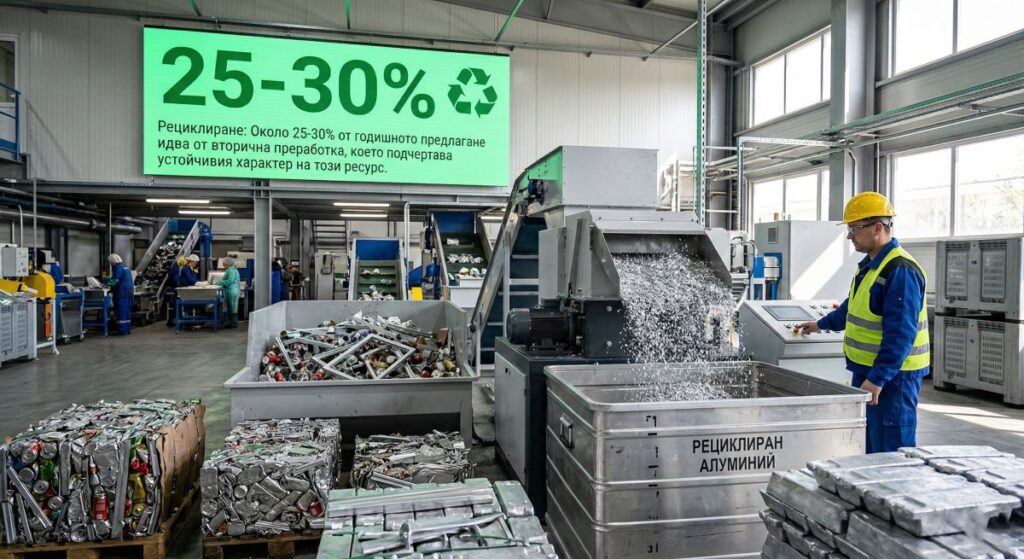
- Recycling: Around 25-30% of the annual supply comes from secondary processing, which highlights the sustainable nature of this resource.
When we analyze the price of gold, we must understand, that it is not just a speculative number. It reflects energy costs, labor and technological innovation in the mining sector. At current prices, it becomes economically viable to develop deposits with lower metal content, which in the long run can balance the market, but requires years to realize.
Global context and comparison with historical cycles
The current performance of gold - growth from over 18% since the beginning of the year - brings us back to the memories of 1979 G., when the world was rocked by an energy crisis and record inflation. Comparing data from World Gold Council, we see, that central banks are currently buying gold at a pace, unseen for decades. This is a clear sign of de-dollarization of international reserves.
While in the 20th century the main driver was industrial consumption, dominates today investment demand. US trade wars are changing supply chains, and high oil prices (often correlated with gold) create inflationary pressures, which is difficult to control through interest rates alone.
Socio-economic dimension and sustainable development
The tall one price of gold has a twofold impact on society. On the one hand, it stimulates economic growth in regions with a developed mining industry, providing thousands of jobs with high added value. On the other hand, there is a risk of increasing illegal mining in developing countries, resulting in severe environmental consequences and violation of human rights.
For the sector to be sustainable, is necessary:
- Transparency of supplies: Using blockchain technology to trace the origin of each bullion.
- Green energy in the mines: Switching to renewable sources to power heavy machinery.
- Reclamation: Investing a portion of excess profits in restoring biodiversity in mining areas.
Predictive analysis: To 6 000 dollars and beyond?
Most leading analysts, including the experts from Bank of America And JPMorgan, are unanimous: the consolidation period will be short. Forecasts point, that within the following 12 month we can see levels of 6 000 dollars per troy ounce.
Risks to the forecast:
- De-escalation in the Middle East: If the nuclear talks in Geneva achieve an unexpected breakthrough, some of the geopolitical premium in the price may evaporate.
- Interest rates: A sharp rate hike by the Federal Reserve would make the dollar more attractive against non-interest-bearing assets such as gold.
Despite these risks, the fundamentals—the inflationary effect of tariffs and the structural deficit in the silver market—remain in place. Investors view any temporary decline in prices as an opportunity to enter a position.
Geotopia opinion: In a world, dominated by volatility and geopolitical chess, gold is once again proving its role as the supreme arbiter of economic confidence. The current price record is not just a market anomaly, a cry for stability in an era of confrontation. We believe, that the future belongs to these, who manage to find the balance between the exploitation of natural resources and the preservation of ethical and environmental standards. Only through a scientific approach and long-term strategy can the industry turn this financial boom into lasting prosperity for society.