


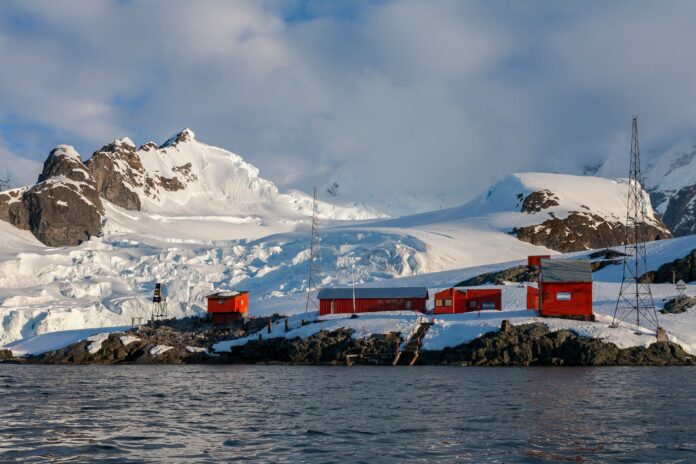
Geological Surveys in Antarctica reveal unsuspected facts about the past of our planet and the potential of its bowels. Bulgarian scientists on Livingstone Island are at the forefront of these discoveries, proving the geodynamic connection between the continents. In recent seasons, field work has provided key answers to the evolution of the Earth's crust.
The importance of Bulgarian geological surveys in Antarctica
Antarctica is not just ice. She is a giant puzzle, the pieces of which are still falling into place. Prof. Hristo Pimpirev and Assoc. Docho Dochev emphasize, that the Bulgarian Antarctic Expedition plays a critical role in mapping little-known territories. Thanks to the research vessel "St.. St.. Cyril and Methodius" (NICK 421), the logistical capacity of our geologists has increased significantly, allowing access to remote sites such as Cape Melville.

Discoveries on Livingstone Island: Fossils and Ancient History
One of the most exciting aspects of the latter geological surveys is the discovery of well-preserved fossils (ammonites). These findings are irrefutable evidence of the biological and physical connection between Antarctica and South America millions of years ago.
- Ammonites and flora: The fossils discovered help paleontologists reconstruct the climate of the Mesozoic era.
- Tectonics: The study of the rock massifs reveals the processes of disintegration of the supercontinent Gondwana.
- International cooperation: The work of our geologists is monitored by the world scientific community, with joint projects often taking place with teams from Spain and Brazil.
Minerals and the future of the mining industry
Although Antarctica is currently protected by the Madrid Protocol, which prohibits the extraction of resources until 2041 G., the potential for minerals is huge. The region is rich in critical raw materials, which are essential for the global green transition.
According to the experts, studies of the geological composition of the Ice Continent are an investment in the future. Here are indications of the presence of:
- Precious metals (gold, silver).
- Non-ferrous metals (honey, nickel).
- Energy resources in shelf areas.
The role of science in the preservation of the ice continent
Any new study of geological structures helps us better understand climate change. Antarctica is Earth's "refrigerator" and knowledge of its base is fundamental to predicting future global ocean levels. Bulgarian scientists continue their mission, proving, that a small country like Bulgaria can make a big contribution to global science.